

Partnerships are key to tackling the huge job the McKenzie River Valley faces after the devastating wildfires. Below are excerpts from our recent posts detailing a few of the incredible environmental and community-focused projects our key partners are working on.
Rebuilding & Reimagining a Community Space
For many months after the fire the Blue River Park Board liaised with multiple agencies to save as many trees as possible while working towards making the park safe again and ensuring we have the best possible setup for building it back better.
When we first started assessing the destruction caused by the Holiday Farm Fire, it looked at times like the park would need to be clear-cut. Yet after much careful consultation with multiple agencies, and assessment by various experts, we were able to save around 30-40 trees, so it is not a total clear cut.
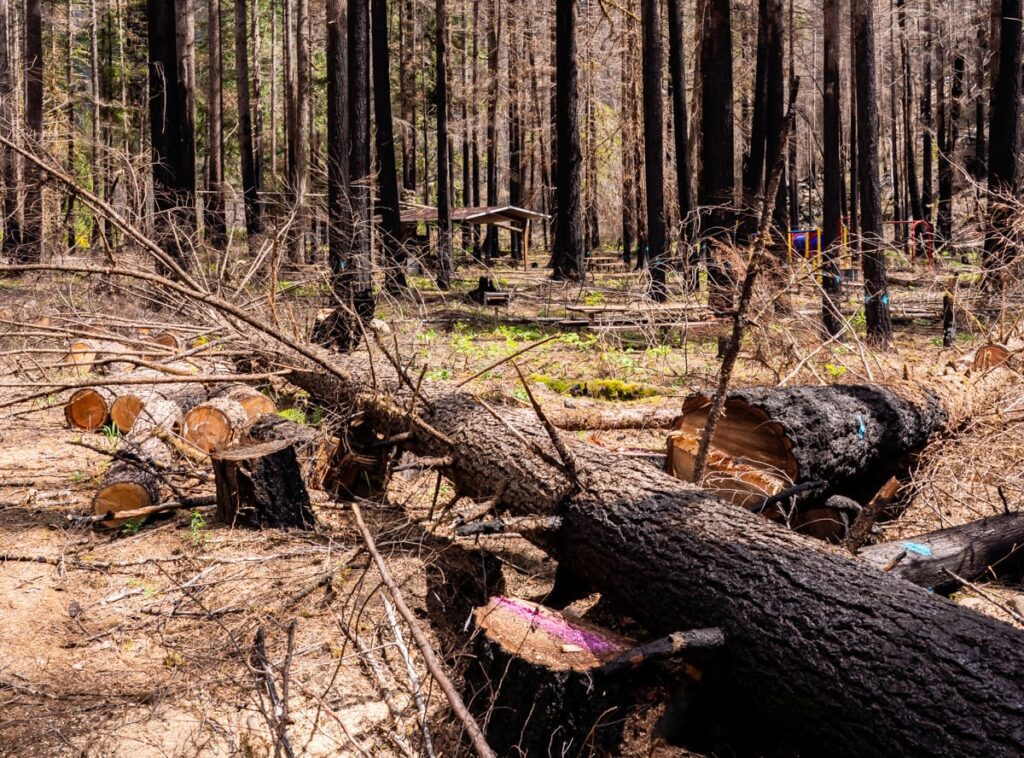
ODOT and Suulutaaq began the clean-up in early May 2021, and all the hazard trees have now been taken down. Due to the extensive fire damage, the old shed, baseball backstop, and fireplace have been removed, but there is also good news in that the park received a FEMA grant to replace the backstop, repair the shelter roof and replace all of the signs in the park. This work is in progress.
Environmental Work
ODOT and Suulutaaq generously agreed to grind the tree stumps for us, as removing those stumps would have disturbed the soil and potentially caused long delays to the whole process and the chips will mulch down and help the soil recover.
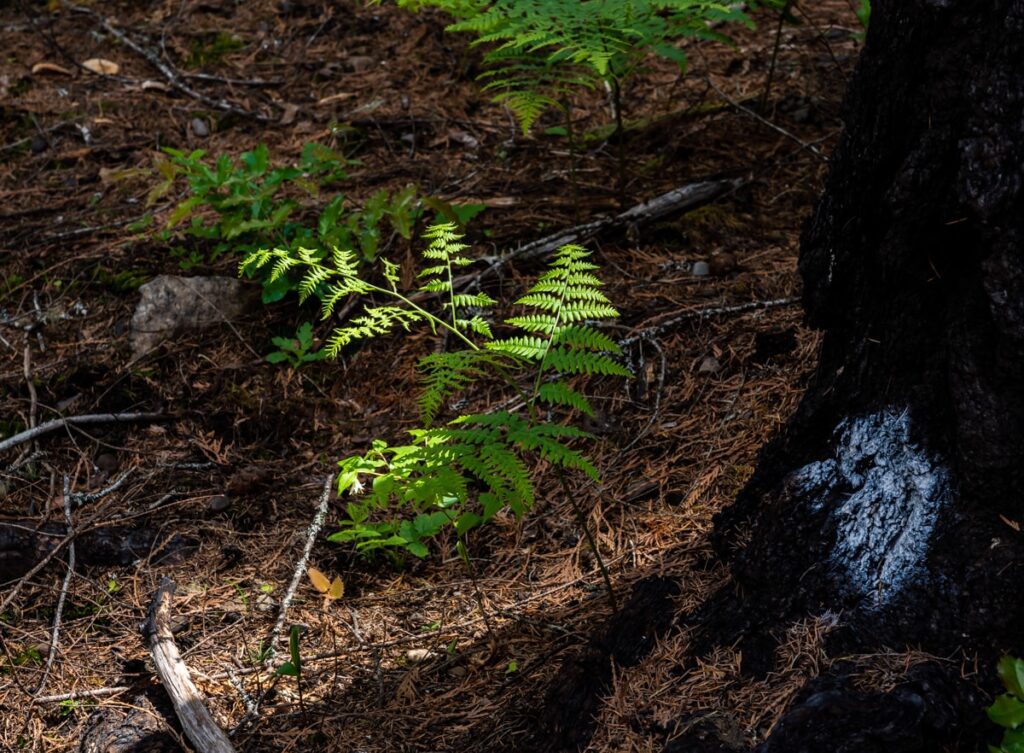
Pure Water Partners, through a grant from EWEB, and in conjunction with the McKenzie Watershed Council, have re-planted the riparian area around the park. The replanting took place in the fall, since doing this in the spring (with the prospect of a dry and hot summer) would greatly have jeopardized the survival of the trees, since we don’t have facilities to irrigate the saplings.
All the many stakeholders involved in this extremely challenging and complex project – The McKenzie Community Partnership, ODOT, Suulutaaq, Pure Water Partners, FEMA, Mason, Bruce & Girard, EWEB and others, have all done outstanding work and been extremely helpful in supporting us every step of the way. We are all very grateful not only for their assistance, and financial support, but also for their genuine empathy and commitment to helping our community park recover and rebuild.
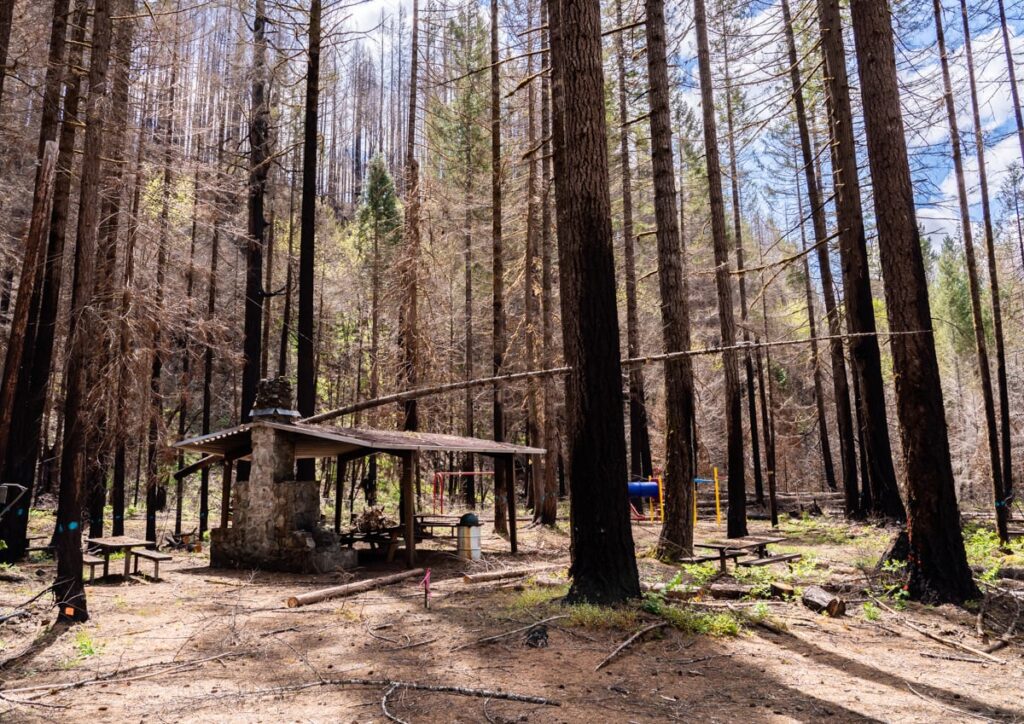
The park is definitely going to have a very different look once this process is finished, but we hope that by the time we welcome you back it will also be a much better place for locals and visitors alike. We will share ideas going forward and will give everyone a chance to have a say in what the vision for the new Blue River Park will look like. Watch this space!
Blue River Revitalization
McKenzie River Trust Holds Land for Blue River Community Revitalization
By Hannarose McGuinness, First Published by Eugene Weekly
As spring makes its way through the valley, oso berry bushes are sprouting up along the riverfront while red-winged blackbirds sing. Although the trees are scorched black at the base, humans and nature are working to restore the McKenzie River area.
The McKenzie River is an eastern tributary of the Willamette River known for its ecotourism around fishing and boating. Communities along Hwy 126 near McKenzie Bridge have spent more than 550 days recovering from the September 2020 Holiday Farm Fire. The wildfire burned 173,000 acres of land and devastated the communities of Blue River, Vida, Finn Rock and Nimrod. Since then, Blue River has been working to rebuild and revitalize the area.
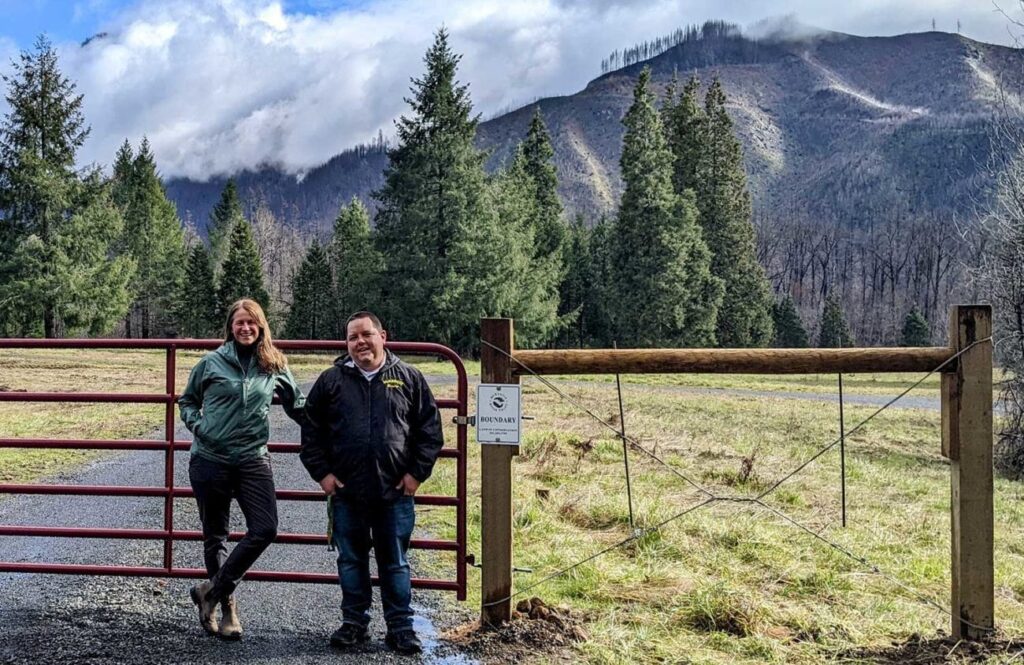
A 16-acre plot of land donated to the community in late 2021 by Rebecca, Kathy and Jody Jones, the former owners of the Seneca sawmill and timber companies, is the latest effort to rebuild Blue River. The community decided to partner with the McKenzie River Trust (MRT) so that the nonprofit would maintain the land as public space while Blue River decides what the best use for the land would be.
Lane Tomkins, McKenzie School District superintendent, says the community’s partnership with the trust has been vital and longstanding. Even though the donation was mere months ago, Tomkins says the land is “in better condition than I think it’s been in a lot of years.”
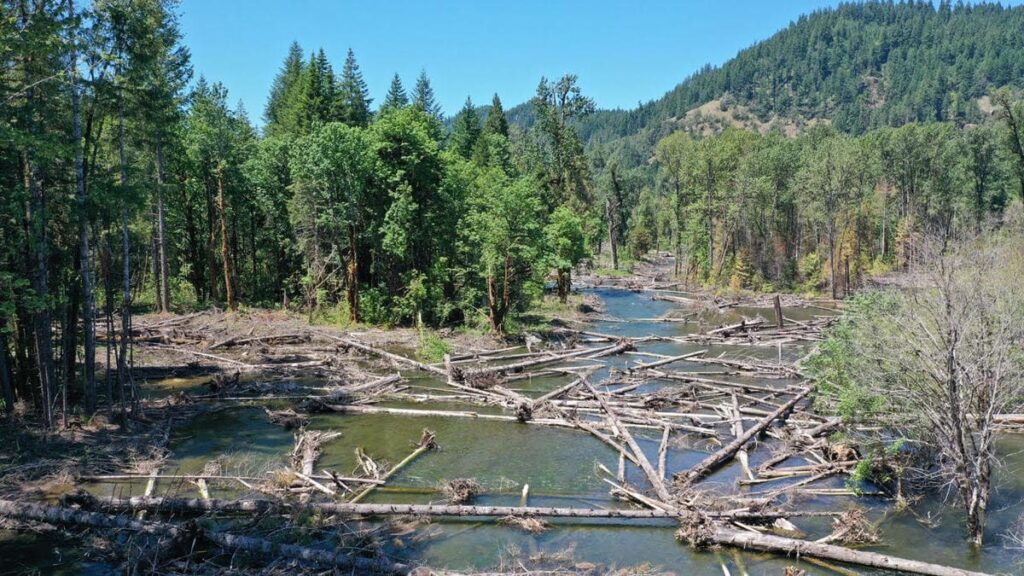
“The trust has been really great,” Tomkins says of MRT. “Even before the fire, they’ve been a really trusted community partner.”
Tomkins says that the workers involved with the trust were some of the first helpers on the ground after the fire, and the organization cares not only about stewarding the land but also helping the people that live on it. He says the kindness and dedication of those partnerships is life-affirming for him.
“One of the big driving things is the partnerships that have come out of this,” Tomkins says. “I think those relationships have really been what keeps me going.”
Brandi Crawford Ferguson, the McKenzie River Trust’s assistant director of philanthropy and McKenzie community liaison, says that after the fire, MRT immediately transitioned its focus and resources to meet urgent community needs, as well as fundraising for the United Way Wildfire Relief Fund, which supports the unmet needs and recovery efforts of people affected by wildfires on the West Coast.
“Obviously, the need is not going away. As a nonprofit organization, we work on behalf of our community and our community needs are different now,” Ferguson says. “This [partnership] is very different for us in that we are holding this land in trust for the Blue River community.”
Ferguson says the trust will likely hold and revitalize the land for years while the community finds the best use of the land to meet their needs. Ideas including affordable housing, a pedestrian pathway connecting downtown Blue River to the track and school, health center and daycare facilities have all been pitched at development meetings.
But before the community can break ground on a new project, it has to tackle zoning laws.
Because the current site used to be home to a mill, the land is zoned industrial, which comes with its own challenges as coordinators and planners attempt to work with the existing land rules of the area. The zoning change would have to be posed as a plan amendment that would require Lane County’s approval.
Although challenges have persisted, Tomkins says the community has been working together and has received meaningful help from numerous organizations and individuals.
“That’s a bigger hurdle than I think we were expecting. We’re all learning,” Tomkins says, of zoning laws. “If I’ve learned anything during this, it’s that there are a lot of really good people that really want to help.”
In the meantime, the trust is revitalizing the land and managing it for public access. Ferguson says they are hoping to work with conservation partners like the Pure Water Partners Program, which MRT is a part of, to enhance the existing wetland area and replant along the creek flowing through the property. She says the next steps of this project will include facilitating listening sessions with the community to understand what residents would like to see in the space.
“It’ll be a wonderful place for people to come and gather,” Ferguson says. “[It] is going to be another gift to the community as well: another open space to be able to enjoy in the interim.”
Ferguson says the Holiday Farm Fire has brought communities up and down the river together to envision what comes next for these fire-affected areas. She says the river is the lifeblood of the Blue River community and others like it on the McKenzie.
“Here we are; we’re just one step closer to moving forward after this disaster,” Ferguson says.
Tomkins says that the number one priority for members of the Blue River community is to maintain the health and vibrancy of the river. He says it isn’t just for the residents but also for everything else that calls the McKenzie home.
“As a kid that grew up here during the economic downturn of the logging industry, most of the background of my life was things closing and people moving and going away,” Tomkins says. “It would be really cool to be a part of making things better for the next generation of kids here to have a little bit more community.”
- Copyright – Eugene Weekly 2022